

STEPS OF MEDICAL TRANSITION
FOR TEENS
The steps of medical transition for teens follow a deliberate order, and the earliest ones are not medical at all. Care usually begins with social and psychological support, using a chosen name and pronouns, counseling, and family support, which involves no medication. When medical steps are considered, they come in sequence: puberty-pausing medication first (once puberty has begun), then gender-affirming hormones for older adolescents. Surgery is not part of care for minors, with the narrow exception of chest surgery considered case-by-case for some older teens. Genital surgery is reserved for adulthood. Two things matter throughout: not every young person takes every step, and each step involves assessment, informed agreement, and, for minors, parental consent.
Understanding the sequence matters because the steps differ a great deal in what they involve and how reversible they are, and because the picture of transition as a single, surgical event is inaccurate, especially for teens. This page walks through each step in order, when it typically happens, what it involves, and how reversible it is. "Medical transition" here refers to the medical steps of supportive care; you may also see this called transition-related care or gender-affirming care, and the terms describe the same thing.
CONTENT NOTE
If your teen is in crisis or thinking about suicide, help is available right now. Call or text 988 (the 988 Suicide & Crisis Lifeline). For more, see our where to get help page.
-
The first steps aren't medical. Care usually starts with social and psychological support: name, pronouns, counseling, with no medication.
-
Medical steps are sequential. Puberty-pausing medication comes first (from early puberty), then hormones for older teens.
-
Reversibility differs by step. The pause is reversible; hormones are partially irreversible; surgery is not reversible.
-
Surgery is not part of care for minors. Genital surgery is reserved for adulthood; chest surgery is considered only case-by-case for some older teens.
-
Not everyone takes every step. The path is individualized, and many young people take only some of these steps, or none of the medical ones.
KEY TAKEAWAYS
WHY THE ANSWER IS A STAGE
Guidelines set the timing by pubertal development because the medication's purpose is to pause changes that have just begun, which is only relevant once puberty starts. The Endocrine Society's dosing standards state that pubertal suppression with GnRH agonists can start at the earliest stages of puberty, Tanner stage 2. The Endocrine Society advises beginning only after a young person first shows physical changes of puberty (Tanner stages G2/B2). Starting earlier would serve no purpose, because there is nothing yet to pause; starting well after puberty has advanced means some changes have already occurred.
Because children enter puberty at different ages, that same stage lands at different ages for different young people, which is exactly why a fixed age doesn't capture it.
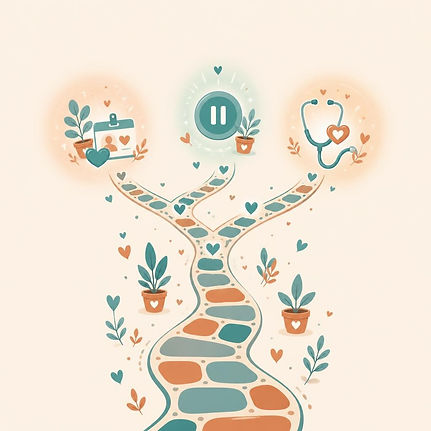
THE STEPS, IN ORDER
Here is the typical sequence, from non-medical support through the medical steps, with rough timing and reversibility for each.
Sources: Endocrine Society (patient guidance); ACOG patient FAQ; GnRH agonist systematic review (2024).
BEFORE ANY MEDICAL STEPS: SOCIAL AND PSYCHOLOGICAL SUPPORT
The first and most common form of support is entirely non-medical. It includes using a young person's chosen name and pronouns, supporting their gender expression, counseling, and a steady, accepting home. Before puberty, this is the only kind of support used; the Endocrine Society notes that hormone-related therapy before puberty is not needed, because the relevant hormones are not yet present. Many young people never go beyond this stage. For more, see supporting a trans child without medical steps.
STEP 1
PUBERTY PAUSING MEDICATION
The first medical step, when appropriate, is puberty-pausing medication (a GnRH agonist). It is considered only once puberty has begun, at around Tanner stage 2. The Endocrine Society describes it as allowing more time to explore gender identity and understand the options while avoiding unwanted development, and describes the medication as reversible: its effects last only while it is taken, and puberty resumes if it stops. For when this can begin, see at what age you can start puberty blockers; for how it works, what puberty-pausing medication is; and for the reversibility details, are puberty blockers reversible.
STEP 2
GENDER-AFFIRMING HORMONES
For older adolescents, gender-affirming hormones (estrogen or testosterone) may be
the next step. As Mayo Clinic describes, after
a period of adjusting to puberty-pausing medication and confirming gender identity, hormone therapy might become an option to develop aligned secondary sex characteristics. Unlike the pause, some of these changes cannot be reversed, which is why the assessment beforehand is more involved. See testosterone therapy and estrogen therapy for what each involves.
STEP 3
SURGERY (RARE FOR MINORS)
Surgery is largely not part of care for young people. According to the NCBI Endotext review of medical interventions for transgender youth, surgeries that affect fertility are generally not available until a person reaches the age of majority. The main surgical option that is sometimes considered for adolescents is chest surgery, and only on a case-by-case basis. Genital surgery is reserved for adulthood.
ACOG notes that whether surgery is an option also depends heavily on the laws where a person lives.
WHAT EVERY STEP HAS IN COMMON
Across all the medical steps, the same safeguards apply: assessment, informed agreement, parental consent for minors, and ongoing care. Before any medical step, a young person is assessed by a qualified team, and ACOG notes this may involve talking with a mental health professional, obtaining a letter of support, and multiple counseling sessions. In most of the United States, a parent or guardian must give permission for hormonal or surgical steps before age 18. And care is ongoing: young people continue to see their providers to monitor health throughout. This is the shared-decision-making structure described in our overview of how gender-affirming care works.
NOT EVERY YOUNG PERSON TAKES EVERY STEP
The sequence is a menu shaped to the individual, not a conveyor belt. Some young people's care is entirely social and never medical. Others pause puberty and stop there. Others go on to hormones. Each step is a separate decision, revisited with the young person, their family, and their team, and reaching one step does not commit anyone to the next. The systematic review of puberty-pausing medication describes the pause as providing time to explore identity or to align with an established one, which is exactly why the next step is never automatic.
A NOTE ON STATE LAWS
What the medical steps allow and what is legally available where a family lives are now separate questions in the United States. The sequence on this page reflects medical guidelines. Separately, many US states have restricted or banned parts of this care for minors, and that landscape changes often, so what is accessible in a given state may differ from what the guidelines describe. Because this shifts frequently, check the current situation for your state. Our laws and access coverage track it, and this page reflects the current medical state of coverage.