
Is Gender-Affirming Care Evidence-Based? A Reputable Guide for Families
Key Takeaways
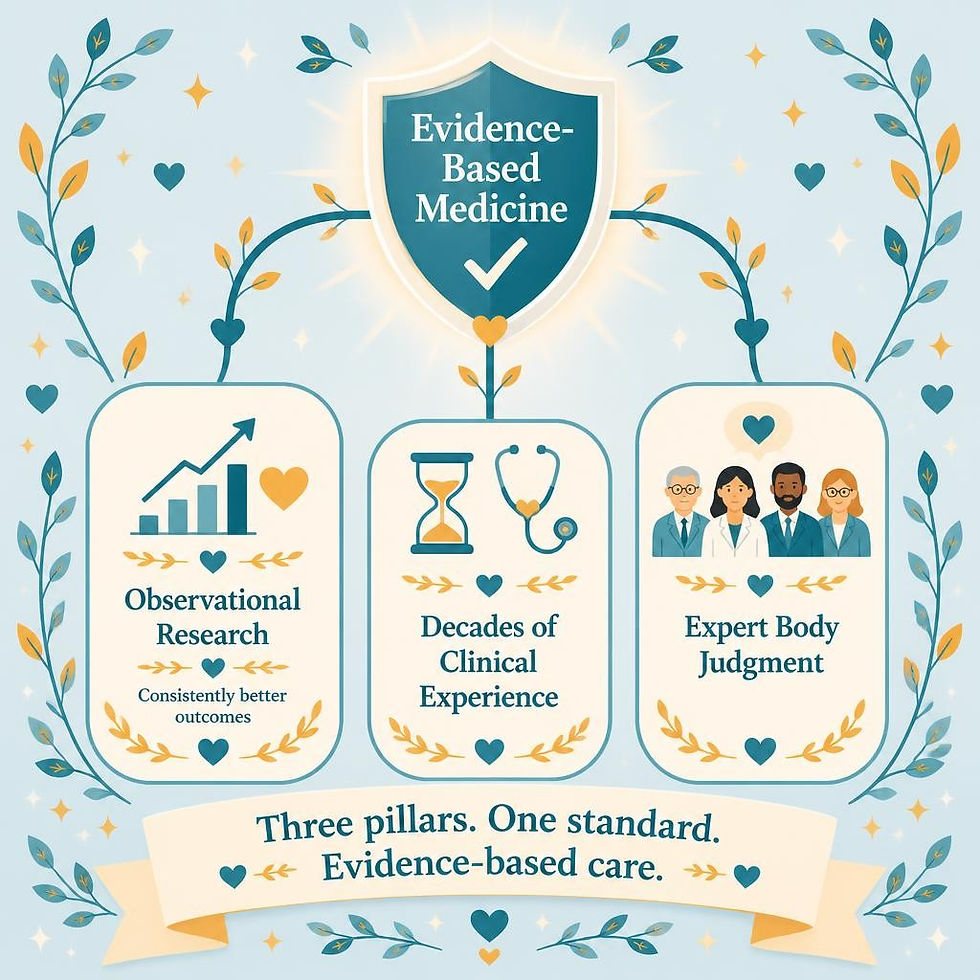
Is gender-affirming care evidence-based? U.S. medical and mental-health associations say yes. Several evidence reviews rate parts of the research as low-certainty. Both statements are true, and they answer different questions.
Certainty ratings measure how much high-quality long-term data exists. They are not findings of harm.
A 2025 systematic review of 51 studies of puberty-pausing medication in young people rated 22 of them moderate to high quality.
The argument that this care is unproven usually rests on the absence of randomized trials. Researchers writing in the American Medical Association's ethics journal argue randomized trials cannot answer many of these questions.
American Medical Association policy, reaffirmed in 2024, calls this treatment medically necessary under accepted standards, decided between patient and physician.
The 2025 federal health report that questioned the evidence was criticized by researchers and medical associations for its methods and undisclosed authorship.
Searches may use gender-affirming care, transition-related care, or supportive care. One subject, three labels.
The short answer
Whether gender-affirming care is evidence-based depends on what the question means. If it means leading U.S. medical bodies have reviewed the research and endorse the treatment, the answer is yes. If it means large randomized trials prove long-term benefit, no such trials exist, and researchers in the field disagree about whether they could.
At TransHealthHub, we find this question usually gets answered with one half of the picture, and parents deserve both halves.
Two different questions get mixed together
The question being asked | What the answer turns on |
Do medical bodies endorse this care? | Published policy positions |
How certain is the long-term evidence? | Study design and follow-up length |
Has it been proven in randomized trials? | Whether such trials are feasible |
Our explainer on what this care involves covers the treatment itself, and our guide to puberty-pausing medication covers the step families ask about most.
What the societies say
They say the care is established, and they say it together. The American Medical Association, American Academy of Pediatrics, American Psychological Association, and the Endocrine Society regard this care as evidence-based and medically necessary, and oppose government interference in these decisions.
American Medical Association policy H-185.927, reaffirmed in 2024, states that medical treatment for gender dysphoria, decided through shared decision-making between patient and physician, is medically necessary under generally accepted standards. The American Psychological Association, in a policy approved in February 2024, supports unobstructed access to evidence-based clinical care for transgender children, adolescents, and adults.
None of these bodies claims the research is finished. They are saying the evidence available is sufficient to treat, which is the judgment medical societies exist to make.
What the reviews actually rated
Low certainty is a statement about the research, not about the patients or the treatment. Reviewers grade a body of evidence on how confident they can be in its results, weighing things like whether participants were randomly assigned, how long they were followed, and how many dropped out. A low grade means the answer could change as better studies arrive. A 2025 systematic review in Frontiers in Endocrinology by Gianluca Tornese and colleagues searched the literature from 2011 to 2024 and identified 51 studies of puberty-pausing medication in transgender and gender-diverse young people, rating 22 of them moderate to high quality. It reported improved mental health outcomes and said long-term safety remains uncertain.
Reviews reaching more cautious conclusions sit alongside it, and the honest reading is that both exist. A 2025 U.S. Department of Health and Human Services report found the quality of evidence on the effects of any intervention to be low and the evidence on harms sparse. Writing in May 2025, KFF noted that the report drew criticism from researchers and medical associations over its methods and its undisclosed authorship.
The randomized trial question
This is where the disagreement actually sits. Theodore Schall, Kaitlyn Jaffe, and Jacob Moses, writing in the AMA Journal of Ethics in 2024, describe critics asserting that the quality of evidence is low and calling for a halt until randomized trials are run. Their own argument is that randomized trials are inappropriate for many questions here, because participants and clinicians can see which treatment was assigned and because withholding established care from a control group raises ethical problems. That is their position, not settled consensus. Critics counter that the absence of such trials is precisely the problem, and neither side has produced the trial that would resolve it.
Frequently asked questions
Is gender-affirming care evidence-based or experimental? Major U.S. medical associations treat it as established care. No association describes it as experimental.
Does low certainty mean it does not work? No. Certainty ratings describe how much high-quality long-term data exists, not whether a treatment causes harm.
Why are there no randomized trials? Masking is difficult and withholding standard care raises ethical problems. Researchers disagree about whether that gap can be closed.
What should a parent take from this? That the disagreement is about the strength of the research, not about whether the treatment is recognized. Questions about a specific young person belong with their clinical team.
Further Reading and Resources
American Medical Association policy H-185.927: clarification of evidence-based care
American Psychological Association (2024): policy statement
Tornese et al., Frontiers in Endocrinology (2025): systematic review
KFF (2025): analysis of the federal report
Schall, Jaffe, and Moses, AMA Journal of Ethics (2024): on randomized trials
TransHealthHub: our explainer on this care
This page addresses a health topic and reflects the evidence as of September 2026. It is not medical advice. Decisions about a young person's care belong to that young person, their family, and their clinicians.


Comments