
Systematic Reviews of Gender-Affirming Care for Youth: What They Found

Key Takeaways
Systematic reviews gather every eligible study on a question and grade how much confidence the evidence deserves.
Several reviews published since 2018 report intended physical effects and possible mental health benefits, while rating certainty as low.
England's Cass Review drew on University of York systematic reviews and judged the published studies poor quality.
A low-certainty rating describes the evidence base; by itself, it does not show harm.
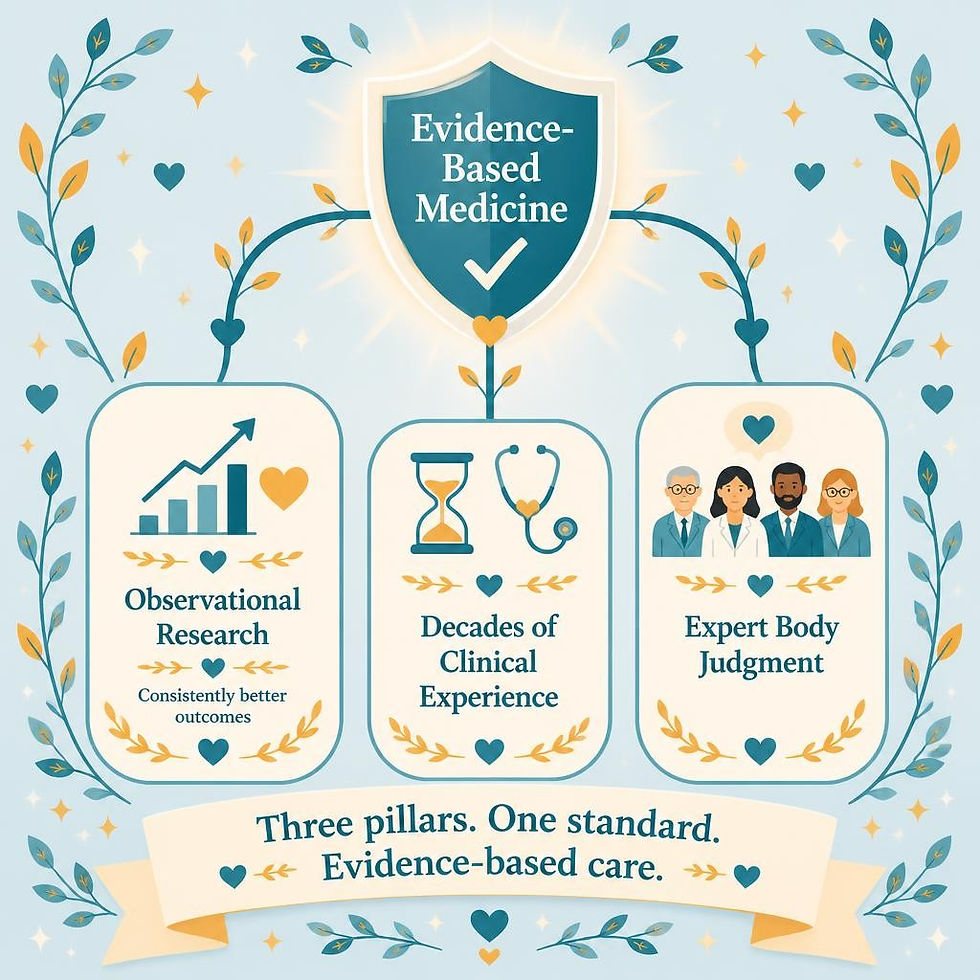
The American Medical Association, American Academy of Pediatrics, American Psychological Association, and Endocrine Society regard this care as evidence-based and medically necessary.
The short answer
Systematic reviews of gender-affirming care for youth, which other sources may call transition-related care and this page calls supportive care, have generally found that treatment achieves its intended physical effects and may be associated with better mental health. The same reviews rate the certainty of that evidence as low, largely because the studies are observational and small. At TransHealthHub, we explain what the major reviews found and how U.S. medical societies read them.
What is a systematic review?
A systematic review is a structured study of studies. Researchers set rules for which research qualifies, search several databases, then judge the findings and how much confidence they deserve. Certainty is typically rated high, moderate, low, or very low. A low rating means future research could change the estimate; it describes the evidence, not the young people receiving care.
What have systematic reviews of adolescent care found?
Most reviews point in the same direction and differ mainly on how firmly to state conclusions.
Review | What it examined | What it reported |
Pediatrics, 2018 | 13 observational studies of hormonal treatment in adolescents, searched through June 2017 | Treatments achieved intended physical effects; evidence on psychosocial effects "generally lacking" |
Journal of Endocrinological Investigation, 2021 | 11 studies of puberty-pausing medication in adolescents, published 2009 to 2019 | Treatment "seems to be well tolerated" and "can equally contribute to the mental health" of adolescents |
Journal of the Endocrine Society, 2021 | 20 studies of hormone therapy, only 3 focused on adolescents | Hormone therapy "may be associated" with better quality of life and lower depression and anxiety |
University of York series, 2024 | Reviews for the Cass Review on social transition, puberty-pausing medication, hormones, and care pathways | Rated the published studies as poor quality |
The 2018 Pediatrics review by Denise Chew and colleagues closed its search before larger youth studies appeared, so it reflects an earlier stage of the research. The 2021 review by G. G. F. Ramos and colleagues noted "few consistent studies" in this area. The Journal of the Endocrine Society review by Kellan Baker and colleagues drew mostly on adult studies, and its authors said certainty was limited by bias risk, small samples, and overlapping treatments.
Why are certainty ratings so often low?
Certainty ratings are low mainly because nearly all research here is observational: researchers follow young people who receive care rather than randomly assigning some to go without it. Such studies can show that two things occur together but cannot prove cause. Even so, leading U.S. medical societies regard this care as evidence-based and medically necessary.
Writing in the AMA Journal of Ethics in 2024, Theodore Schall, Kaitlyn Jaffe, and Jacob Moses argued that "a range of logistical and ethical objections" make randomized controlled trials "inappropriate for answering many important questions" in this area. That is the authors' view, not AMA policy.
What did the Cass Review and the 2025 federal report conclude?
Both concluded that much of the pediatric evidence is low certainty. The Cass Review, an independent review of youth gender services in England's National Health Service published in 2024, commissioned the University of York to conduct "a series of independent systematic reviews of existing evidence." Its final report states that those reviews "demonstrated the poor quality of the published studies."
In the United States, the 2025 Department of Health and Human Services (HHS) report reached a similar view on evidence quality and also discussed potential risks, as KFF's summary describes. That report reflects federal policy rather than an independent review, and several medical groups objected to its methods. Our Cass Review guide covers that report's findings and critiques.
How do U.S. medical societies read these reviews?
U.S. medical societies have maintained their support for this care as these reviews appeared. The American Medical Association, American Academy of Pediatrics, American Psychological Association, and Endocrine Society regard this care as evidence-based and medically necessary and oppose government interference in these decisions. In a May 2024 statement, the Endocrine Society said the Cass Review contained no new research contradicting its clinical guideline. The American Medical Association has said medical decisions "belong within the sanctity of the patient-physician relationship," in a 2021 release.
Our overview of supportive care explains what the care includes, and our mental health research summary looks at individual studies behind these reviews.
Frequently asked questions
What do systematic reviews of gender-affirming care for youth conclude? They generally report intended physical effects and possible mental health benefits, while rating the certainty of the evidence as low.
Does low certainty mean the care is unsafe? No. It means confidence in the estimates is limited, and more research is needed.
Why are there so few randomized trials? Some researchers argue that ethical and practical objections make them a poor fit here, so observational studies carry most of the evidence.
Further Reading and Resources
Hormonal treatment review, Pediatrics, 2018
Puberty suppression review, Journal of Endocrinological Investigation, 2021
Hormone therapy review, Journal of the Endocrine Society, 2021
York review series, Archives of Disease in Childhood, 2024
Final report, Cass Review, 2024
HHS report analysis, KFF
This page addresses a health topic and reflects the evidence as of September 2026. It is not medical advice. Decisions about a young person's care belong to that young person, their family, and their clinicians.


Comments